
Building Generational Wealth: Bridging Racial Economic Disparities
A few days ago, I came across an Instagram discussion by Lee Jenkins, popularly known as The Stewardship Coach, about why White families in America are, on average, significantly wealthier than Black families.
It made me think—not simply about how we got here, but about a more important question:
What can our generation do about where our families go from here?
That question resonates deeply with me.
I am African. I am Nigerian. I come from a culture where family, education, hard work, sacrifice, and providing for the next generation are deeply valued. Like many Africans who have built lives abroad, I also understand what it means to establish yourself in a new economic system—often without generations of accumulated assets behind you.
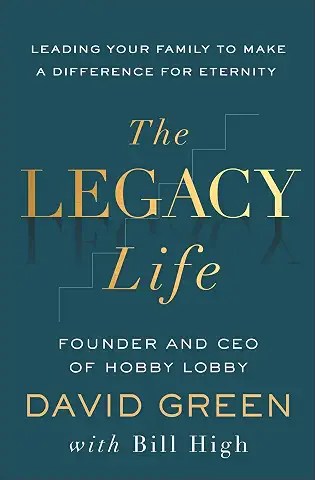
At the same time, I have been reading The Legacy Life: Leading Your Family to Make a Difference for Eternity by David Green and Bill High. Together, these ideas have caused me to think differently about wealth, inheritance, stewardship, and legacy.
Not just:
What am I building?
But:
What will still be standing three, four, or five generations after me?
That is a different conversation.
The Wealth Gap Is Real
According to the U.S. Federal Reserve’s 2022 Survey of Consumer Finances, median White family wealth was approximately $285,000, compared with about $44,900 for Black families.
That is a significant gap.
And behind those numbers is a simple truth:
Wealth compounds. But so does the absence of wealth.
A family beginning with property, investments, or inherited capital starts from a very different position than a family beginning with little—or with debt.
History helps explain why.
For generations, Black Americans faced slavery, segregation, discriminatory housing policies, and restricted access to economic opportunities that allowed many other families to acquire and transfer assets.
We cannot rewrite that history.
But we can ask what it teaches us about building differently today.
1. Ownership Compounds Across Generations
One of the clearest lessons from the racial wealth gap is the power of ownership.
A house purchased 50 years ago may be mortgage-free today. Its appreciation can help finance a child’s education, another home, a business or an inheritance.
One generation’s asset becomes another generation’s advantage.
This principle extends beyond real estate to businesses, stocks, investment funds, retirement accounts, intellectual property and other productive assets.
As Africans, we often place tremendous emphasis on education—and rightly so. Many Nigerian parents will sacrifice almost anything to ensure their children receive a good education.
But education should not be the end of the wealth-building strategy.
We must learn to convert income into assets.
A successful career can create a comfortable lifestyle. Assets can create a legacy.
So perhaps we should ask more often:
What am I acquiring today that could still benefit my family 30 or 50 years from now?
2. Wealth Is Transferred, Not Just Earned
Two people can earn the same salary and have completely different financial realities.
One may begin adulthood with student debt and no family financial support. Another may receive help with tuition, a down payment on a home, and eventually an inheritance.
Same income.
Different starting point.
This is why income and wealth should never be confused.
Income is what you earn. Wealth is what you own minus what you owe. ~ Lee Jenkins
For many immigrants and first-generation professionals, success can easily become:
Get educated → Get a good job → Earn well → Live comfortably.
There is nothing wrong with that.
But we need another step:
Earn → Save → Invest → Own → Transfer.
When income increases, instead of immediately asking, “What can I upgrade?” perhaps we should first ask:
“How much of this increase can I convert into an asset?”
Repeated consistently, that decision can change a family’s trajectory.
3. Financial Knowledge Is Also an Inheritance
Not every inheritance comes through a will.
Some inheritances are passed around the dinner table.
Children who grow up hearing healthy conversations about investing, mortgages, business, credit, taxes, insurance, generosity and compound interest enter adulthood with an advantage.
They understand money before they have much of it.
For many African families, conversations about money can sometimes focus heavily on earning, saving and avoiding waste. Those are valuable lessons—but our children also need to understand investing, ownership, entrepreneurship and wealth transfer.
We don’t have to become millionaires before teaching them.
Let them understand that money can be:
Earned. Spent. Saved. Invested. Given. And transferred.
But financial knowledge is only part of the inheritance.
We also transfer faith, values, character, discipline, reputation, relationships, wisdom and purpose.
Our children are already inheriting from us by watching how we work, spend, give, respond to adversity, and treat others.
Which raises an important question:
What are our children learning about money and life simply by watching us?
Before transferring wealth, we must transfer the capacity to steward wealth.
4. Think Beyond One Generation
This may be the biggest shift in my own thinking.
Most of us plan within our lifetime:
Get educated. Build a career. Buy a home. Raise children. Save. Retire.
But what if our financial plan extended beyond retirement?
What if part of our responsibility was to build something capable of producing good long after we are gone?
That changes the questions:
What assets are we building?
What values define our family?
What mistakes shouldn’t our children have to repeat?
Do our children know our family’s story?
Can the next generation start further ahead than we did?
And ultimately:
What will exist because we existed?
That is legacy thinking.
5. Generational Wealth Is Bigger Than Money
This distinction matters deeply to me.
If our only response to the racial wealth gap is that Black families need more money, we have missed something.
Money matters.
Ownership matters.
Assets matter.
But legacy is bigger than money.
What good is leaving millions without wisdom?
A business without character?
Property without discipline?
Investments without generosity?
A surname without a good name?
This is where my Christian understanding of stewardship becomes important.
Ownership says:
My career. My money. My house. My business. My success.
Stewardship asks:
“What has God placed in my hands, and how can I use it well for those around me and those coming after me?”
For me, that is a richer definition of wealth.
If You Are the First Generation, Start Anyway
This is particularly important for immigrants, Africans in the diaspora, Black families, and anyone building wealth from the first generation.
Maybe you didn’t inherit property.
Maybe there is no family business.
Maybe your parents couldn’t finance your education.
Maybe nobody taught you about investing.
Maybe, like many immigrants, moving to another country meant rebuilding much of your financial life.
Start anyway.
Every generational story has a first generation.
Someone buys the first investment property.
Someone opens the first investment account.
Someone builds the first successful business.
Someone writes the first will.
Someone begins documenting the family story.
Someone teaches the children differently.
Someone changes the trajectory.
Why shouldn’t that person be you?
Five Things You Can Start This Month
1. Know your number.
Calculate your approximate household net worth: what you own minus what you owe.
2. Move from consumption toward ownership.
Redirect part of your spending toward assets that can appreciate or produce income.
3. Automate investing.
Start with what you can afford. Consistency matters more than appearances.
4. Talk about money as a family.
Teach your children about saving, investing, debt, generosity, business, and ownership.
5. Define your family’s legacy.
Complete this sentence:
“Because our family was here, future generations will…”
Don’t overthink it.
Just start. Want to go deeper? Here are three books I recommend to help you change how you think about money, ownership, and building for the next generation.
- Rich Dad Poor Dad ~ Robert Kiyosaki – Learn to think in terms of assets, ownership, and financial literacy
- The Psychology of Money ~ Morgan Housel – Understand the behaviours and habits behind long-term wealth.
- The Total Money Makeover ~ Dave Ramsey – A practical approach to getting your household finances under control
The Generation That Changes the Story
History matters because it explains how we arrived here.
But history does not have to dictate where our families finish.
As a Nigerian and an African, I think there is something particularly powerful about this idea.
Many of us come from families that sacrificed enormously to give the next generation an education and a better opportunity. Perhaps our responsibility now is to take that sacrifice one step further—to turn opportunity into ownership, ownership into legacy, and legacy into something future generations can steward well.
We cannot change what happened 50, 100, or 200 years ago.
But we can influence what happens over the next 50, 100, or 150 years.
Perhaps the greatest legacy isn’t simply what we leave behind.
It is what we set in motion.
So the question is no longer simply:
“What did I inherit?”
The better question is:
“What will I pass on?”
Free Family Resource
Don’t Just Read About Legacy. Start Building Yours.
I’ve created the Ausnolblog Family Legacy & Wealth Checklist—15 practical questions to help you assess what your family is building, protecting, teaching, and passing on.
Use it personally or sit down with your spouse and family and work through it together.
→ DOWNLOAD THE FREE FAMILY LEGACY & WEALTH CHECKLIST
Join the Ausnolblog Community
If this article made you think differently, I’d love to continue the conversation.
Join me for practical ideas and thoughtful conversations about: Money. Career. Business. Faith. Life. Enter your email, and I’ll send the checklist directly to you.
Affiliate Disclosure: Some links in this article are affiliate links. If you make a purchase through them, I may earn a small commission at no additional cost to you. I only recommend resources I believe may provide value to my readers.

